AskBuc Inc. · Contract Manufacturing
Build a soluble tea concept that is ready for the real world.
Soluble tea with functional mushroom ingredients brings together a dry beverage format, a distinctive flavor system and a practical single-serve package. AskBuc helps organize the formulation, ingredient, packaging and manufacturing questions behind the concept, then coordinates the reviewed production route through manufacturing partners.
A dry beverage brief with the important decisions connected
A soluble tea project is not just a list of tea and mushroom ingredients. The product brief should define the intended market, serving format, taste direction, sweetness, mixability, ingredient specifications, packaging and documentation needs before a production route is selected.
AskBuc can help move an early beverage idea, an existing dry blend or a reformulation into a clearer manufacturing inquiry. We coordinate the appropriate development and production conversations through partners; the selected route, responsible producer, quantity, documents and commercial terms are confirmed for the project.
- Soluble or instant tea beverage concepts for ready-to-mix use.
- Functional mushroom ingredient concepts described by product category, not guaranteed efficacy.
- Existing formulas, bulk powders or new formulation briefs.
- Flavor, sweetener, serving-size and packaging decisions that need to work together.
- A manufacturing-readiness package for partner review and a project-specific quote.
Tea bases and mushroom ingredient concepts
Tea selection establishes much of the product's flavor, color and positioning. Black tea can support a bold profile, green tea a lighter profile, and matcha a finely milled green-tea presentation with a pronounced umami direction. The appropriate base depends on the desired sensory profile, ingredient specifications, serving format and target market.
Mushroom ingredients can be evaluated as extract or powder components within the beverage brief. Common concept directions include chaga, reishi, lion's mane, cordyceps, turkey tail, shiitake and maitake. AskBuc can organize questions about source material, identity, specification, extract ratio or other supplier documentation, but does not infer potency, safety or a health outcome from an ingredient name alone.
The formula review should also consider total serving size, solubility or dispersion, aroma, color, interactions with tea and any market-specific label or claim review required before production.
- Black tea, green tea and matcha as starting points for soluble beverage concepts.
- Single-mushroom or multi-ingredient concepts, subject to formula and partner review.
- Ingredient identity, specification, sourcing and documentation requirements.
- Blend behavior, serving presentation and sensory compatibility.
Flavor and sweetness systems
Tea and mushroom profiles can require deliberate flavor development. A formulation brief may compare natural sweetener options such as stevia, monk fruit or coconut sugar, then define the sweetness level and label direction that fit the product.
Natural flavor directions can include peach for a fruit-forward profile or lemon oil and lemon juice powder for a citrus profile. These are development options, not a promise that every combination will taste or process alike. AskBuc can help coordinate sample questions around aroma, aftertaste, acidity, dispersion, ingredient compatibility and the final package format.
A useful sample plan states what the team is deciding: taste, appearance, mixability, ingredient balance, serving size or packaging handoff. Revisions, testing, formula ownership and the number of sample rounds are agreed in the project scope.
- Stevia, monk fruit or coconut sugar as possible sweetener directions.
- Peach, lemon oil, lemon juice powder or another approved flavor direction.
- Taste, aroma, color, mouthfeel, dispersion and aftertaste as review criteria.
- Formula and label review for the destination market before artwork approval.
From dry blend to finished single-serve pack
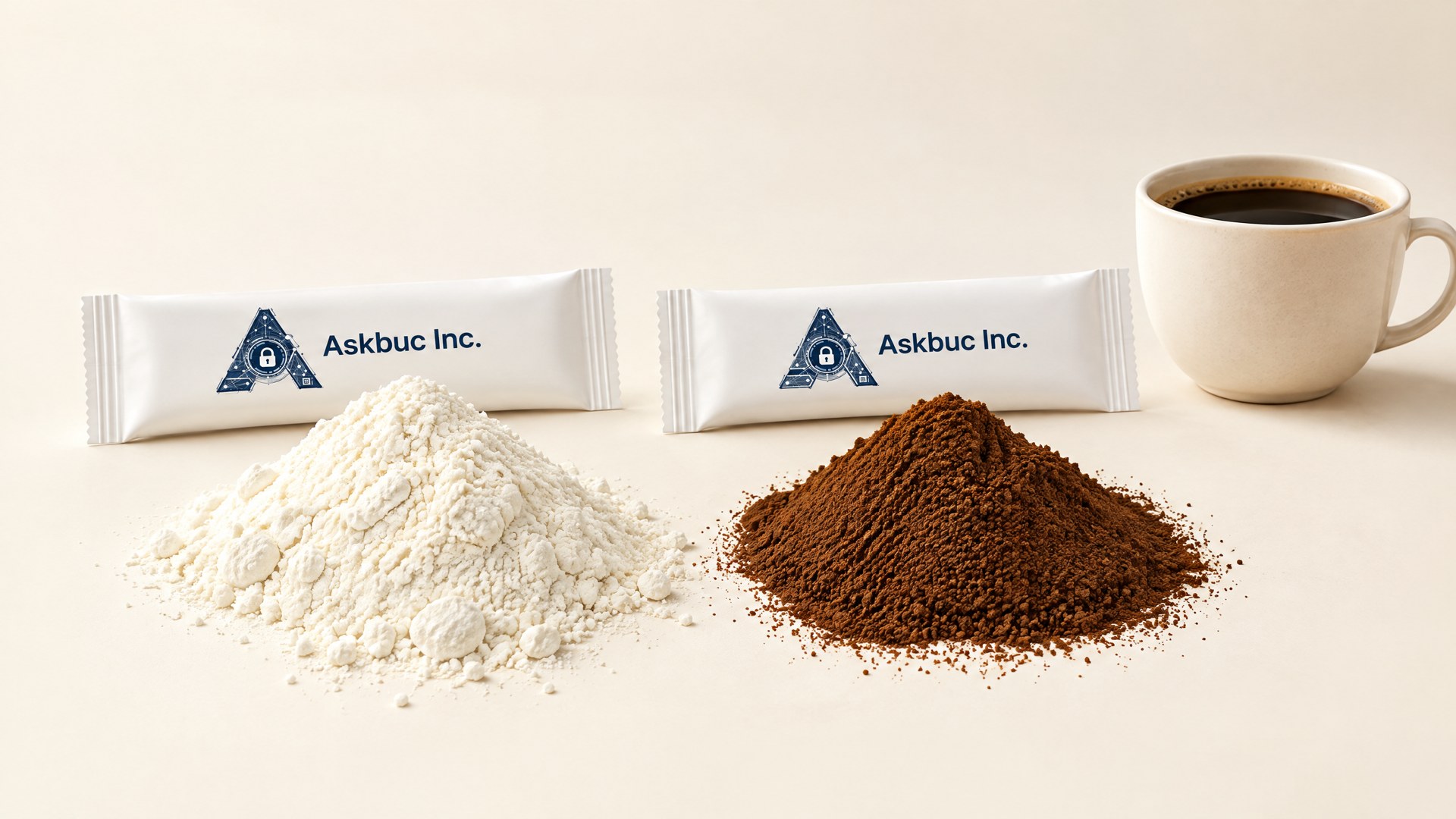
Single-serve stick packs can make a soluble tea concept easier to portion, carry and distribute for travel, work or home use. They also turn powder handling into a defined packaging problem: fill weight, powder flow, film compatibility, pack dimensions, seal performance, print layout and secondary packaging all need review.
AskBuc can evaluate stick-pack co-packing for a customer-supplied powder or connect the packaging discussion to formulation and blend development. Printed film, artwork inputs, lot or date coding, carton configuration, receiving responsibilities and finished-unit expectations should be agreed before a production slot is approved.
Pouches, jars or another dry-product format may also be considered when they better fit the formula, channel or commercial plan. Format availability, minimum quantity, materials, pricing and timing are project-specific and are not implied by this page.
- Single-serve stick packs for suitable soluble tea and dry beverage powders.
- Powder flow, target fill, film selection, seals and print layout.
- Artwork handoff, label inputs, lot identification and secondary packaging.
- Bulk powder receiving, filling, sealing and finished-goods coordination.
- Alternative pouch or jar discussions when appropriate for the product.
Product development and R&D that answers specific questions
Development can begin with an ingredient brief, an existing formula or a product problem. AskBuc helps structure discovery around intended use, target consumer, tea base, mushroom direction, flavor, sweetener, serving format, package and market.
If samples are needed, the development plan should identify the purpose of each round, the feedback criteria, the approved formula version and what evidence is needed before scale-up. Possible questions include taste and appearance, blend handling, dispersion, packaging compatibility, ingredient documentation, stability or other product-specific testing. Testing methods, laboratories, cost, timing and responsibility are confirmed rather than assumed.
Once the reviewed formula and format are ready, AskBuc can organize a manufacturing-readiness handoff with specifications, material responsibilities, artwork status, quantity assumptions, quality-document requests and open decisions for the production partner.
- Discovery and product-brief development.
- Formula creation, reformulation or refinement of an existing blend.
- Defined sample rounds with recorded feedback and approval points.
- Packaging and scale-up questions before a commercial run.
- A production handoff that keeps formula, package and quote inputs aligned.
Quality, documentation and release planning
Quality planning starts with the actual product category and selected production route. For a soluble tea or mushroom beverage powder, the review may cover ingredient and packaging specifications, supplier documentation, approved formula versions, lot identification, in-process checks, finished-product testing, traceability, sample retention, deviations, change control and release records.
AskBuc coordinates the documentation request and clarifies who supplies each record. A certificate of analysis or laboratory report may be relevant where required, but its issuer, method, sample, specifications and inclusion in the project must be confirmed. The responsible manufacturer or qualified quality owner makes the production and release decisions assigned in the agreement.
Human beverage, dietary-supplement and animal-industry projects are not interchangeable. Intended use, ingredients, labeling, market and claims determine the applicable review path. Ingredient concepts on this page are not medical, nutritional, immunity, cognitive, energy, endurance or other efficacy claims.
- Approved product, ingredient, packaging and artwork specifications.
- Supplier and incoming-material records where required by the scope.
- Batch, lot, coding, in-process and finished-product records.
- Testing, sampling, laboratory, traceability and release responsibilities.
- Change-control, complaint, deviation and storage or shipping requirements where applicable.
Commercial planning and a clear inquiry
A useful inquiry includes the tea base, mushroom ingredient direction, formula status, target serving or fill weight, flavor and sweetener preferences, package format, artwork status, estimated quantity, destination market and requested documentation. If the project uses customer-supplied powder, include the available material specification and receiving requirements.
AskBuc reviews the brief, identifies missing technical or commercial decisions and coordinates the manufacturing-partner conversation. The written scope should identify the responsible producer, approved formula and package, materials, quantity, development or tooling work, testing and records, delivery assumptions, acceptance criteria and any separately charged work.
Bring a high-level brief through the inquiry path first. Request the approved secure exchange method before sending a proprietary formula, confidential customer information or production files.
- Product category and destination market.
- Tea base, mushroom ingredients and formula or sourcing status.
- Serving size, flavor, sweetener and target pack configuration.
- Estimated quantity, artwork status and desired documentation.
- A project-specific manufacturing quote after review, not a generic online promise.
Can AskBuc help develop an instant tea with mushroom ingredients?
Yes. We can review a new concept, an existing formula or a dry blend and coordinate formulation, sample, packaging and manufacturing questions through production partners. Tea base, ingredients, format, market and documentation requirements are reviewed before the route is quoted.
Which tea bases can be considered?
Black tea, green tea and matcha are useful starting points for soluble tea concepts. The practical choice depends on the desired sensory profile, formula, ingredient specifications, processing behavior and destination-market requirements.
Which functional mushroom ingredients can be used?
Concept discussions may include chaga, reishi, lion's mane, cordyceps, turkey tail, shiitake and maitake. Actual suitability depends on identity, specification, sourcing, formula compatibility, intended use and the selected production route. Ingredient names do not establish a health or performance claim.
Can you help with flavors and sweeteners?
Yes. The brief can explore stevia, monk fruit or coconut sugar and flavor directions such as peach, lemon oil or lemon juice powder. Sample criteria should cover taste, aroma, dispersion, aftertaste, label inputs and compatibility with the selected package.
Can you fill the powder into stick packs?
Stick-pack co-packing can be evaluated for suitable soluble tea and dry beverage powders. Fill weight, flow, film, dimensions, seals, artwork, quantity and secondary packaging must be reviewed with the responsible production partner before a quote is issued.
Can I supply an existing bulk powder?
That can be reviewed as a co-packing inquiry. AskBuc will need the material specification, formula or ingredient information, target fill, packaging direction, quantity, receiving responsibilities and any required testing or documentation.
What development or testing work can be included?
A project may include formulation or refinement, defined samples, sensory feedback, packaging compatibility review, specification development and agreed testing questions. The number of iterations, methods, laboratory, cost, timing, ownership and deliverables are set in the written scope.
What quality documents will be available?
The project may request ingredient and packaging specifications, supplier records, batch or lot records, test reports, certificates of analysis where applicable, traceability information and release documentation. The responsible issuer, exact records and inclusion in the scope are confirmed for the selected route.
Does AskBuc operate the manufacturing facility?
AskBuc coordinates and manages manufacturing through production partners. The responsible producer, site, format, quantity, quality records, schedule and commercial terms are identified and confirmed for each project.
What are the minimum order quantity, pack dimensions and lead time?
Those details depend on the formula, powder behavior, package materials, quantity, development or tooling needs, production partner and current schedule. They are confirmed in the project-specific quote rather than assumed from a general page.
AskBuc works through production partners. Manufacturing site, scope, quantity, quote and quality documentation are confirmed for each project. Do not submit proprietary formulas through the public inquiry. Call (219) 256-5454 or email support@askbuc.com.